
- Before traveling there is an evaluation video call: that way you know, before buying a ticket, whether your case can be treated with ablation.
- The trip is four or five days: arrival, tests, outpatient procedure and a check before the flight.
- Follow-up is done from your country, and what happens if the nodule regrows is stated beforehand and in writing.
When you travel for treatment, it helps to have everything that can be known in advance settled before the flight. What follows is the list of questions a well-informed patient asks any clinic in the world, and the specific answer for Dr. Jacobo's international unit.
1. How do I know, without traveling, whether my case can be treated with ablation?
Through an evaluation video call, after sending the ultrasound and any biopsies you have. In it Dr. Jacobo reviews the studies and tells you whether your case can be treated with ablation, which studies are missing and which technique fits your nodule. We usually reply to the form or the WhatsApp message within one business day, Dominican time, and we coordinate the video call, the studies and the dates.
2. Who performs the procedure and under what anesthesia?
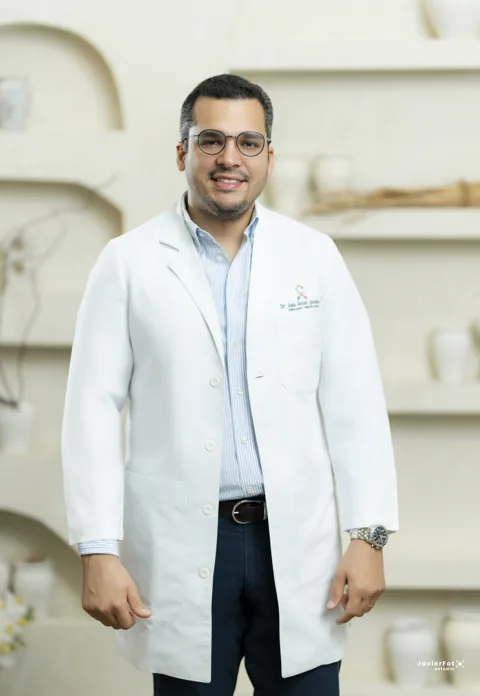
The same doctor who evaluated you, a surgical oncologist, under local anesthesia and watching the electrode on screen the whole time. Guidelines call for local anesthesia, not general or deep sedation, because it allows any change in the voice to be detected in time. It is a question always worth asking: who evaluates, who treats and how.
3. How many days do I need?
- 01Day 1: arrivalCibao airport, in Santiago, has direct flights from New York, Miami and other cities. HEMA is about fifteen minutes away.
- 02Day 2: testsLabs and a cardiology check at the same hospital where the procedure is done.
- 03Day 3: the procedureOutpatient, performed under local anesthesia. You return to your lodging the same day.
- 04Day 5 or 6: check and flightA check before flying, 72 hours after the procedure.
A companion is not required: the procedure is performed under local anesthesia and does not require admission. Even so, it is nice to have company, and one person is welcome at the consultation and at the center.
4. What does the cost include?
It is given in writing at the evaluation, before you decide anything, and by center. Three things are worth asking any clinic: whether the preliminary tests are included or billed separately, whether the cost changes with the size of the nodule, and what happens with a second session if one is needed. All three answers are part of the cost information you receive in writing.
5. How is follow-up done remotely?
After the procedure there is no need to fly again. The follow-up ultrasounds, at one month, three, six and one year, are done in your country, with your radiologist, and Dr. Jacobo reviews them and, if needed, speaks directly with the radiologist who performs them. Thyroid function is checked at those same visits, with blood tests done there.
6. What if the nodule regrows?
It is a question worth asking, and one that does not always get asked. One to two in ten nodules regrow in long-term follow-up, according to the literature. It is seen at the check-ups and decided then: a second session, whose cost is stated separately, or in some cases surgery. You are told beforehand and it is put in writing.