

SantiagoHEMA
He sees patients on Thursdays.
Consultations, biopsies and ablation all take place here, fifteen minutes from Cibao International Airport.
Nodules, goiter and cancer, with the option of treatment without surgery when the case allows it.
Start hereSantiago, Santo Domingo and San Francisco de Macorís. If you are coming from abroad, your evaluation is virtual and takes place before you travel.
He knows how to operate on the tumor and when surgery is not the answer.
See the specialtyA surgical oncologist trained in the Dominican Republic, Mexico and South Korea. Learn how he thinks and how he makes decisions.
Meet the doctorA fine electrode, guided by ultrasound, applies heat inside the benign nodule, and the body gradually reabsorbs it. It is performed under local anesthesia, without an incision and leaving the gland in place. It is not right for every nodule, and that is assessed at your evaluation, before any treatment begins.
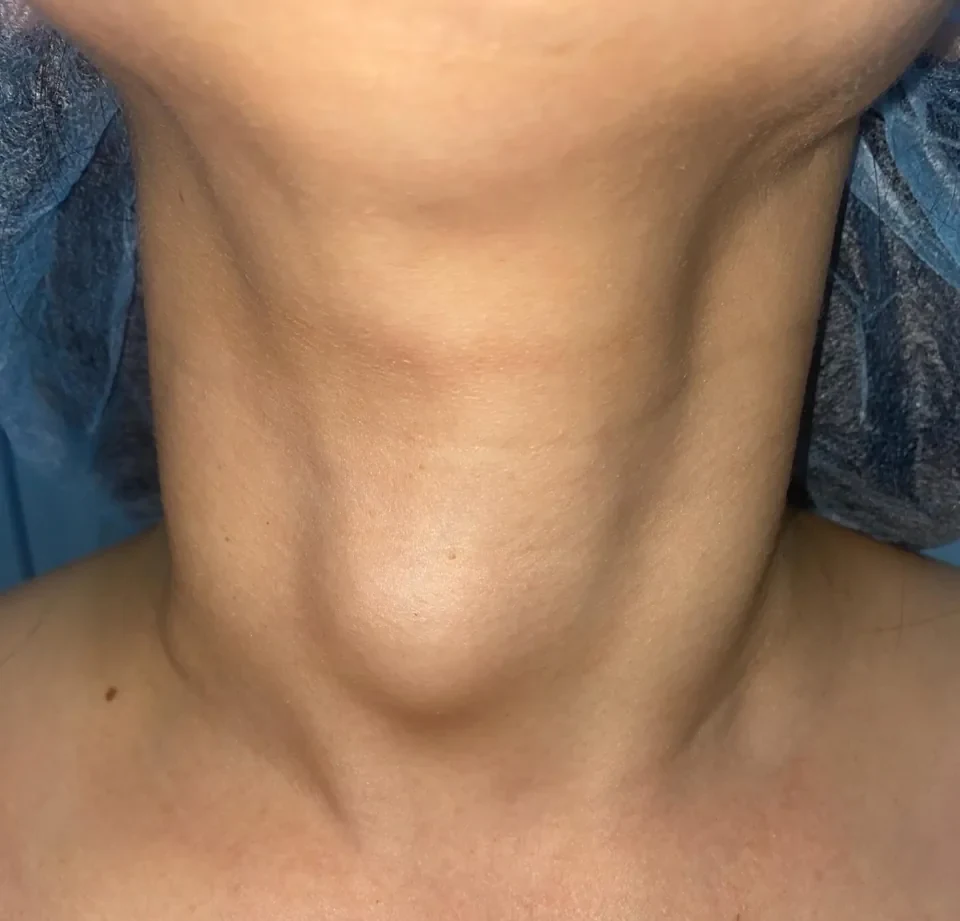
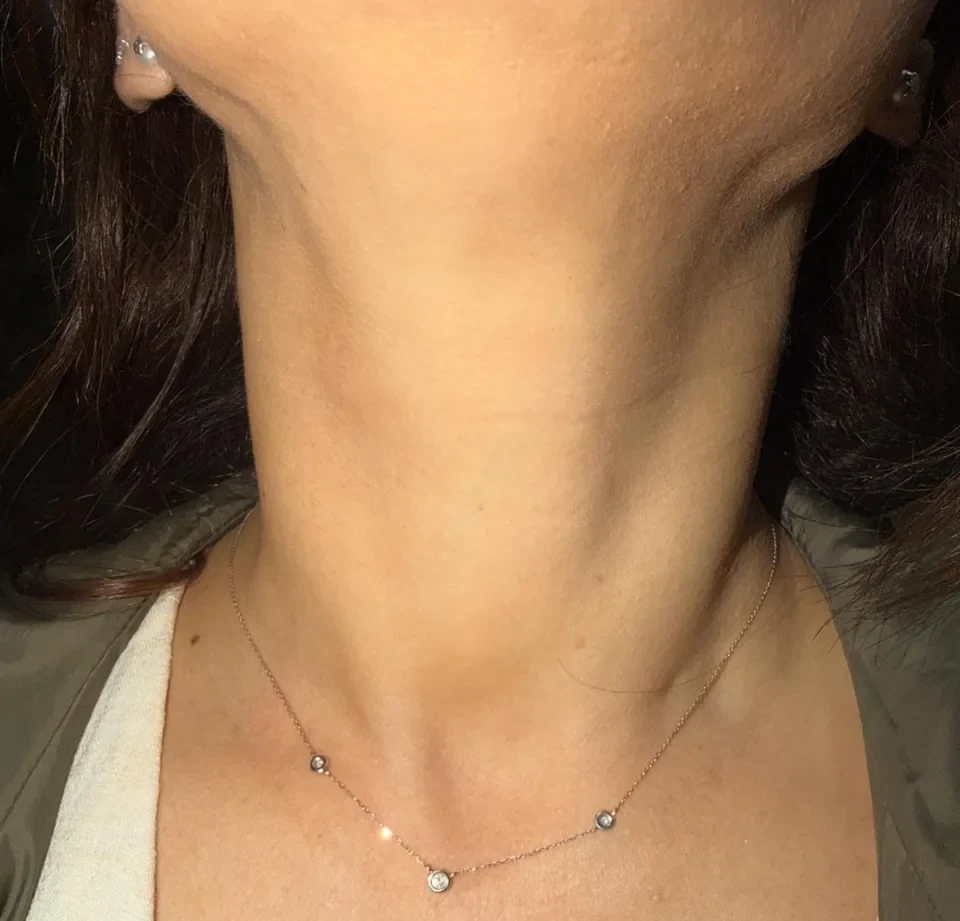
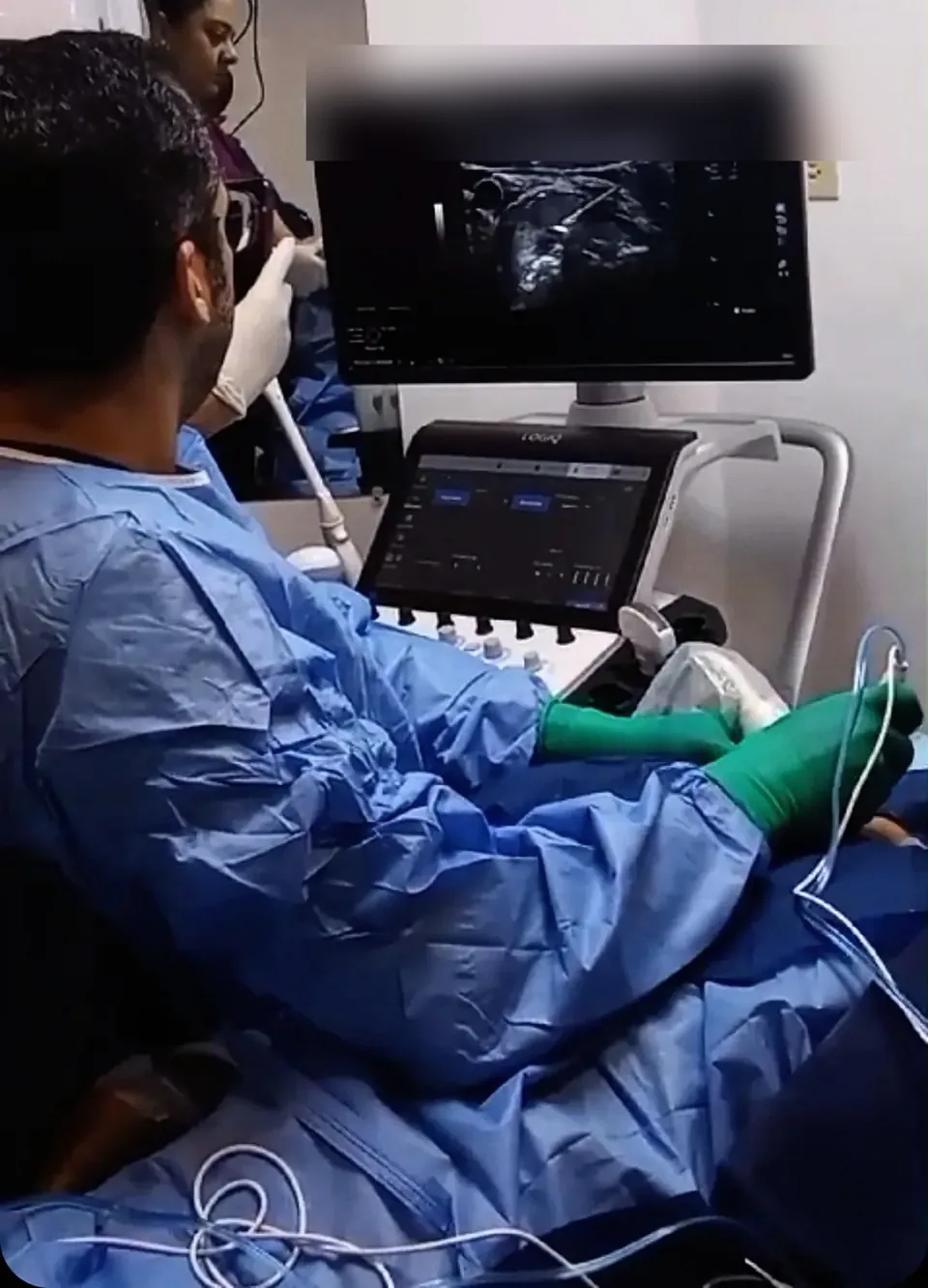
Radiofrequency is a form of energy that produces heat when it is concentrated at the tip of a needle-thin electrode. That heat, applied section by section inside the nodule, destroys its tissue, which the body reabsorbs over the following months as the nodule shrinks.
Everything happens under real-time ultrasound, so the electrode is visible on screen at every moment, along with everything around it. The electrode goes in through the center of the neck and the nodule is treated from the inside out, to keep away from the nerves that control the voice.
One session is almost always enough. In large nodules or nodules in both lobes a second one may be needed, and we let you know before we begin.
These figures come from published clinical studies, and each one is shown with its reference.
Relief from symptoms such as pressure, discomfort when swallowing or a visible lump comes before the final measurement. That is why ultrasound follow-up is part of the treatment. If your nodule grows back, we explain the options, which are a second session or, in some cases, surgery, and they are set out in writing at the evaluation.
Radiofrequency ablation shrinks the nodule from the inside, under local anesthesia, with no scar and same-day discharge. The videos are in Spanish.
It is the question patients ask most, and with good reason: the nerve that controls the vocal cords runs right behind the thyroid.
In published series of benign nodules, a little over two in a hundred patients have some complication, and most are minor and temporary. Voice change occurs in about one in a hundred patients, and the voice almost always recovers on its own. Permanent damage is described in fewer than two in a thousand cases.
No procedure is free of risk, and this one is no exception. What can be done is to reduce that risk: working with the electrode on screen the whole time, entering through the center of the neck and knowing exactly where that nerve runs. That knowledge of the anatomy of the neck is part of the work, and it is the reason a surgical oncologist performs this procedure.
Chung SR, Baek JH et al., International Journal of Hyperthermia 2017 (2,421 patients): complications 2.38%; voice change 1.02%; permanent nerve injury 0 to 0.17%.
Cystic nodules have a different first-line treatment. When the nodule is mostly fluid, the guidelines recommend ethanol ablation first, a simpler technique, and radiofrequency is the next step. At the evaluation we explain which technique is right for your nodule.
The biopsy has to confirm that the nodule is benign. One is enough when the ultrasound also classifies it as benign (TIRADS 2), and otherwise two concordant results are needed. Even so, no biopsy is infallible: in a series of 148 nodules treated with “confirmed” benignity, seven turned out to be cancer. That is why ultrasound follow-up is part of the treatment.
There are established criteria, and we will go over them with you at your first consultation.
a biopsy confirmed the nodule is benign and, in addition,
For a very small papillary carcinoma with no lymph node involvement, the guidelines consider ablation an option for selected patients. If the cancer is larger than one centimeter or has spread, surgery is the recommended treatment, and Dr. Jacobo performs it himself.
Both are valid treatments, but they suit different situations.
Your biopsy and ultrasound determine which of the two is right for you.
Radiofrequency ablation treats the nodule with a fine electrode guided by ultrasound, under local anesthesia and with same-day discharge, and it leaves no scar.
After half of the thyroid is removed, one in four people needs thyroid hormone (Cooper, 2024). After radiofrequency ablation, fewer than one in a thousand do (Baek, 2012).
Drag to compare
The timelines for discharge and return to routine are Dr. Jacobo's guidance, while the figures for shrinkage and follow-up come from the guidelines.
The consultation includes a review of your tests and an explanation of the options that fit your case, even if none of them is with us. The cost of the procedure depends on the size of the nodule and the center where it is performed, and you receive it in writing at the evaluation, itemized, before you decide anything.
His patients often mention that he explains every step.
I want to express my deepest gratitude to the doctor for being my guide and support during one of the most difficult times of my life: my thyroid cancer treatment. From…
 Yaskira PerezMay 2026
Dr. Jacobo is highly professional, skilled, and incredibly kind. He takes the time to explain every step and every procedure, ensuring his patients have no unanswered…
 Rosemil OvalleFebruary 2025
Dr. Jacobo is an excellent professional with world-class attention to detail. When treating a close relative with thyroid surgery, at a leading center in the field, he…
 Anthony TejadaJanuary 2025
Wonderful doctor. I had no idea I'd been suffering from thyroid problems for some time, and you gave me an accurate diagnosis that changed my life. Thank you so much…
 Ana AguileraJanuary 2025
I had a total thyroidectomy performed by Dr. Jacobo. It was a difficult surgery, but I came out of the operating room feeling excellent. Dr. Jacobo loves what he does…
 Sheila Sabrina Calderon cuelloJune 2025
I am incredibly grateful for the care I received from Dr. Jacobo. I initially found him through a Google search while looking for alternative treatment options for my…
 Kate LockhartMarch 2026
My husband was diagnosed with colon cancer. Amidst our worry, we chose Dr. Jacobo because I was struck by his genuine and selfless interest in my husband's diagnosis. He…
 Nidia AcostaSeptember 2025
Dr. Joan is a physician with outstanding professional training and a true calling: compassionate, approachable, and always attentive, not only to his patients but also to…
 Andi AlmanzarSeptember 2025
I recently underwent surgery by Dr. Joan Jacobo, and there's nothing better than the safety and peace of mind for a patient and family, ensuring their health is in the…
 Omar Encarnación UlloaSeptember 2025
An excellent doctor, my dear Dr. Jacobo. After seeing many doctors without a clear answer about what was wrong with me, I finally found Dr. Jacobo. With great care and…
 Alexandra Fontana ReynosoJanuary 2025
I want to express my sincere gratitude to the doctor for his excellent work and dedication. From the very first moment, he instilled confidence, security, and a human…
 Josmeiry PaulinoMarch 2026
Dr. Joan Jacobo studied and performed a brain scan for my mother, and the experience was much more bearable thanks to his wonderful professional and, above all, humane…
 Anibelka MenaApril 2024
I want to highlight Dr. Joan's excellent service, experience, and dedication to his patients. Personally, I want to emphasize that few doctors dedicate the time, care…
 Massiel LizardoJuly 2025
Dr. Jacobo is a specialist who inspires great confidence and security. He knows how to soothe the anxiety that comes with having to see him! He's a doctor at the…
 Jenny Guzman De GonzalezApril 2024
Dr. Joan Javier Jacobo is an excellent oncology professional. He is highly qualified and recommended by other oncologists in the country. I wholeheartedly recommend him.…
 Angelica MejiaAugust 2024
Dr. Joan Javier Jacobo is an excellent professional and physician with a genuine and compassionate nature that is highly effective for his patients. I, his patient for…
 Mariela Jiminian CamiloApril 2024
An excellent doctor, dedicated to his patients, providing exceptional care with love and dedication. You are a doctor who inspires confidence; all patients should have an…
 Jisselle PaulinoFebruary 2025
An excellent professional, ethical, committed, and approachable. A doctor who, in addition to being highly qualified, provides his patients with peace of mind…
 Mercedes RosarioJune 2025
My dear Dr. Jacobo, for me you are an excellent doctor, kind, gentle, and a great professional. I had kidney surgery performed by him and I feel very well. I bless you…
 Margaret CastrillonJanuary 2025
Dr. Joan took the time to listen attentively, answer all my questions, and explain everything clearly and calmly. I felt heard, well cared for, and in good hands…
 Lizvanessa JavierApril 2026
In most cases, one session is enough. Large nodules, or nodules in both lobes, may need a second one, and we tell you before we begin, along with its cost.
Benign nodules, confirmed by biopsy, that measure more than two centimeters, cause symptoms, are visible or have grown, as well as nodules that produce too much hormone. In a very small papillary carcinoma without lymph node involvement, the guidelines also allow ablation in selected patients. If the cancer is larger than one centimeter or has spread, surgery is the recommended treatment.
It happens in one or two out of ten nodules over long-term follow-up. It shows up on the follow-up ultrasounds, and at that point we decide with you between a second session or, in some cases, surgery.
You have follow-up ultrasounds during the first year and then one every year or two. If you live abroad, you can have the ultrasound done in your country, and Dr. Jacobo reviews it.
It is performed under local anesthesia, so during the procedure you feel warmth or pressure, and the discomfort can radiate to the jaw or the ear. Afterwards, common pain relievers for two or three days are enough.
Your ultrasound and biopsy, if you have had them, and your thyroid blood tests. Before the procedure we order a blood count, coagulation tests and a cardiology evaluation, which are done here.
In-person visits are booked with each center, by phone or WhatsApp. Tuesdays and Fridays are the doctor's surgery days, so there are no consultations on those days.
He sees patients on Thursdays.
Consultations, biopsies and ablation all take place here, fifteen minutes from Cibao International Airport.

He sees patients two Saturdays a month, and the dates are confirmed by phone or WhatsApp.
Consultations, biopsies and ablation all take place here, in the Gazcue neighborhood of Santo Domingo.
He sees patients on Mondays and Wednesdays.
Consultations take place here, in suite 106.
Bring your ultrasound and your biopsy to the consultation, in person in Santiago or Santo Domingo or by video call from anywhere, and you will receive the full cost of your case in writing at the evaluation.
