- Teaching the technique through a program endorsed by a medical society means the criteria are taught too: who is a candidate, who is not and which anesthesia to use.
- More trained doctors means more places to be treated and more second opinions available, not that every nodule should be treated.
- A course does not replace the questions worth asking any doctor: where they trained, how they decide whom to treat and what they do if the nodule regrows.
A new technique reaches a country in one of two ways: each doctor trains abroad on their own initiative, or someone introduces it and teaches it through a program. The second takes longer to organize, but it benefits patients more, because what is passed on is not only how to handle the electrode but also the criteria that say when the procedure should not be done.
What exactly is being taught
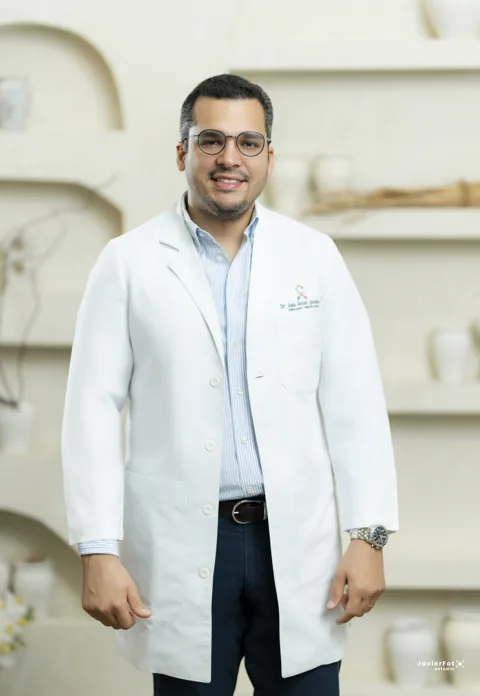
The first edition was held in May of this year in Santo Domingo, with theory and live practice. The technique taught is that of the Korean and European guidelines: the same one Dr. Jacobo learned from Dr. Juan Pablo Dueñas in Colombia and refined at the Asan Medical Center in Seoul under Dr. Jung Hwan Baek, one of the authors of the Korean guideline.
The criteria are taught alongside the technique
A well-performed ablation begins before the equipment is switched on. It begins with a A Bethesda II result on the needle biopsy: the pathologist sees no malignant cells. To treat without surgery, one is enough when the ultrasound classifies the nodule as benign (TIRADS 2), and otherwise two concordant results are needed., a single one when the ultrasound also classifies the nodule as benign (TIRADS 2) and two concordant ones otherwise. It requires a nodule that measures more than two centimeters, causes symptoms or is visible, a blood test that rules out autonomous hormone production, and Only the area of the neck where the electrode enters is numbed, and the patient is awake and can speak, which is how the voice is monitored. rather than general anesthesia, so the doctor can talk with the patient and catch any change in the voice in time. All of this is written in the guidelines. A training program endorsed by a medical society teaches it first, and that is why such a program matters.
- When it is indicated: in a benign nodule, confirmed by one biopsy when the ultrasound classifies it as TIRADS 2 and by two otherwise, that measures more than two centimeters, causes symptoms, is visible or overproduces hormone. In selected patients, also in a papillary cancer of one centimeter or less without lymph node involvement.
- When it is not indicated: with suspicious features or an indeterminate result, in a follicular neoplasm, in a cancer larger than one centimeter or one that has spread, or in a nodule of two centimeters or less that causes no symptoms and has not grown.
- Which anesthesia: local anesthesia. The guidelines rule out general anesthesia and deep sedation because they delay the detection of complications.
- Which follow-up: follow-up ultrasounds during the first year and then every one or two years, because some nodules An increase in nodule volume of more than 50% over the minimum reached after treatment. It happens in one to two in ten..
What changes for you
- 01More places to be treatedWith more trained doctors, the technique stops depending on a single practice and a single city. That shortens waits and trips.
- 02More second opinions availableWhen several doctors share the same criteria, it is easier to compare a treatment proposal against them. And a second opinion that confirms the first one is just as valuable.
- 03A shared standardA program endorsed by a medical society sets a common minimum standard: the decision of whom to treat, and whom not to, is made according to the guideline.
- 04What stays the sameAblation is still for benign nodules that measure more than two centimeters, cause symptoms or have grown, and, in selected patients, for a papillary cancer of one centimeter or less without lymph nodes. A larger cancer, or one that has spread, still goes to surgery, and sometimes the right answer is to monitor and not intervene for now.
Five questions to ask the doctor who will treat you
- Where and with whom did you train in this technique, and when?
- How many benign biopsies do you require before treating, and of what type?
- Under which anesthesia do you perform the procedure?
- Which follow-up schedule do you use afterwards, and who reviews the ultrasounds?
- What do you do if the nodule regrows, and is that included in the cost estimate?
All five come from the guideline, and any doctor can answer them comfortably. It is also what doctors who train here are taught: patients have the right to ask them.
- Kim JH et al. 2017 Thyroid Radiofrequency Ablation Guideline: Korean Society of Thyroid Radiology. Korean J Radiol. 2018, 19(4): 632-655.
- Papini E, Monpeyssen H, Frasoldati A, Hegedüs L. 2020 European Thyroid Association clinical practice guideline for the use of image-guided ablation in benign thyroid nodules. Eur Thyroid J. 2020, 9(4): 172-185.
- Diario Salud. Santiago acogerá entrenamiento profesional en radiofrecuencia para el tratamiento de nódulos tiroideos. September 7, 2026. https://diariosalud.do/radiofrecuencia-tiroides-entrenamiento-santiago
