
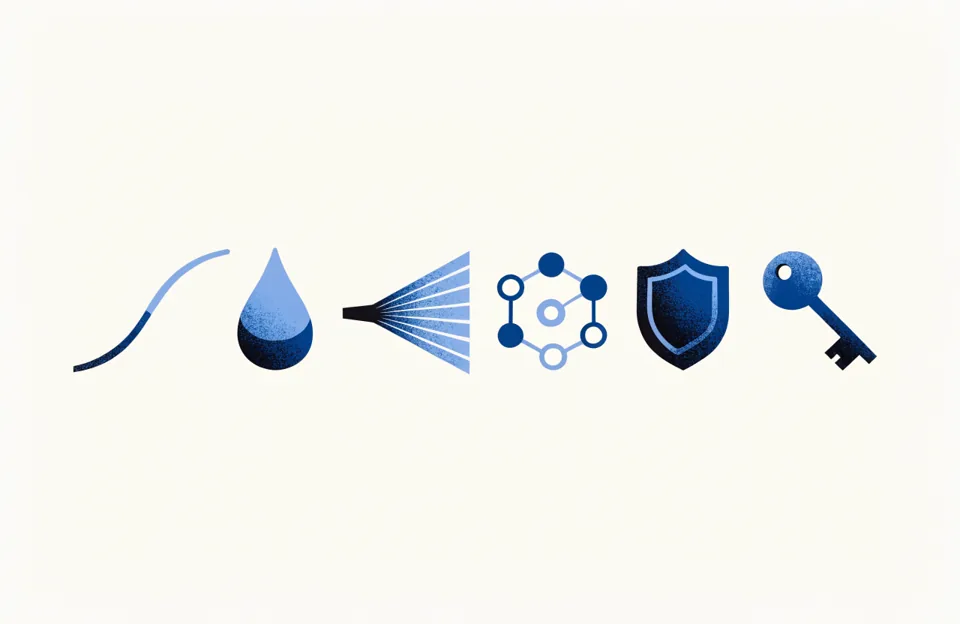
- Each treatment does something different: remove, destroy from a distance, block, or teach the body to attack.
- In localized solid tumors, surgery is usually the main step and sometimes the only one.
- The combination is not decided by one doctor alone: a team decides it with the tumor type, its stage and your health in front of them.
Surgery
Removing the tumor with a The rim of healthy tissue removed around the tumor to make sure no cells are left behind. of healthy tissue around it and, when needed, the nearby lymph nodes. In localized solid tumors it is usually the main step and sometimes the only one: breast, thyroid, colon, skin and soft tissue, early-stage lung. It also serves to diagnose, because a biopsy is a small surgery, and to relieve symptoms. Today many are performed through small incisions and preserving the organ's function.
Chemotherapy
Drugs that attack fast-dividing cells, which is what cancer cells do. It may be given before surgery to shrink the tumor, after it to eliminate what cannot be seen, or as the main treatment in blood cancers and in those that have already spread. Its side effects are real and managed, and its role in many cancers remains central.
Radiotherapy
High-energy radiation aimed at the tumor to destroy its cells or shrink it. Used alone or after surgery, for example after keeping the breast, and to relieve pain when a tumor compresses a neighboring structure. It is a local treatment: it acts only on the area being irradiated.
Hormonal therapy
Some cancers grow fed by hormones: part of breast cancers, prostate cancers. Blocking that hormone slows the tumor. It is usually a long treatment, in pills or injections.
Targeted therapy and immunotherapy
Targeted therapy attacks a specific feature of the tumor's cells, with less harm to the rest than classic chemotherapy. Treatment that stimulates or trains the patient's own immune system to recognize and attack cancer cells. teaches the body's own immune system to recognize and attack the cancer. Both are indicated by the tumor's molecular analysis: that is why the biopsy says more today than it used to.
- 01SurgeryRemoves the tumor and, if needed, the lymph nodes. It acts only in the operated area.
- 02ChemotherapyDrugs that travel through the whole body and act anywhere in it.
- 03RadiotherapyRadiation aimed at the tumor, acting only where it is pointed.
- 04HormonalBlocks the hormone that feeds the tumor, and is usually a long treatment.
- 05TargetedAttacks a specific feature of the cells, based on the molecular analysis.
- 06ImmunotherapyTeaches the immune system to attack the cancer, based on the molecular analysis.
Who decides the combination
It is decided by a team made up of the surgical oncologist, the medical oncologist, the radiation oncologist and the pathologist, with the tumor type, its stage and the patient's health in front of them. It is called a tumor board, and it is worth asking whether your case went through one.